

Bitcoin’s drop below $73,000 on Wednesday marks a short-term turning point for the market, as multiple BTC distribution signals point toward rising sell-side pressure.
While the increasing chance of a correction into the $60,000 to $70,000 range remains in play, long-term holder data points to improving investor sentiment, suggesting that traders view the current price as a buying opportunity.
Coinbase discount confirms market stress
Crypto analyst CryptoOnChain noted that Bitcoin’s drop to $72,500 followed a period of weakening spot demand and unsustainable long positioning in derivatives markets. The Coinbase premium index posted a -1,083% deviation from its three-month average, one of the deepest discounts recorded since 2025.
The premium gap fell to -$94.95, indicating that US-based traders sold Bitcoin at prices below offshore market levels. Readings at similar levels have historically occurred during major distribution periods rather than during standard pullbacks.
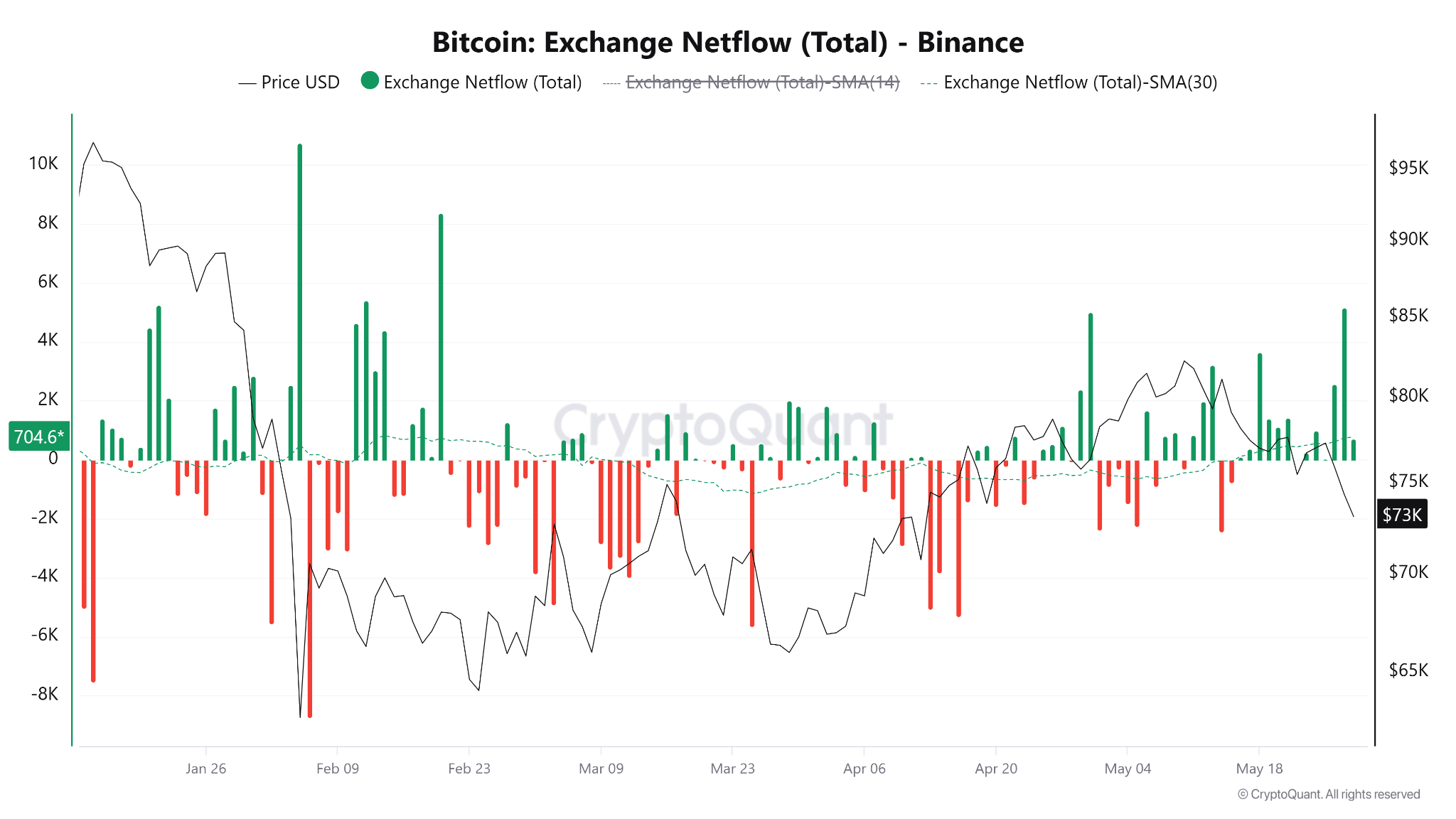
BTC: exchange netflow on Binance. Source: CryptoQuant
The selling pressure also shifted toward Binance. Bitcoin netflows on the exchange averaged +1,496 BTC over the past seven days, a 528% jump above the three-month average.
BTC futures data added more pressure. Binance funding rates climbed 781% above their three-month average before Bitcoin lost the $75,000 level. Crypto liquidations also hit $935 million on Wednesday, as the total crypto market cap dropped by $41 billion.
Onchain activity across BTC wallet cohorts also showed large exits. Bitcoin address outflows across entities holding between 100 BTC and 10,000 BTC reached 648,000, the highest since Feb. 5 and Feb. 6, when exits exceeded 1 million and 905,000 BTC, respectively.
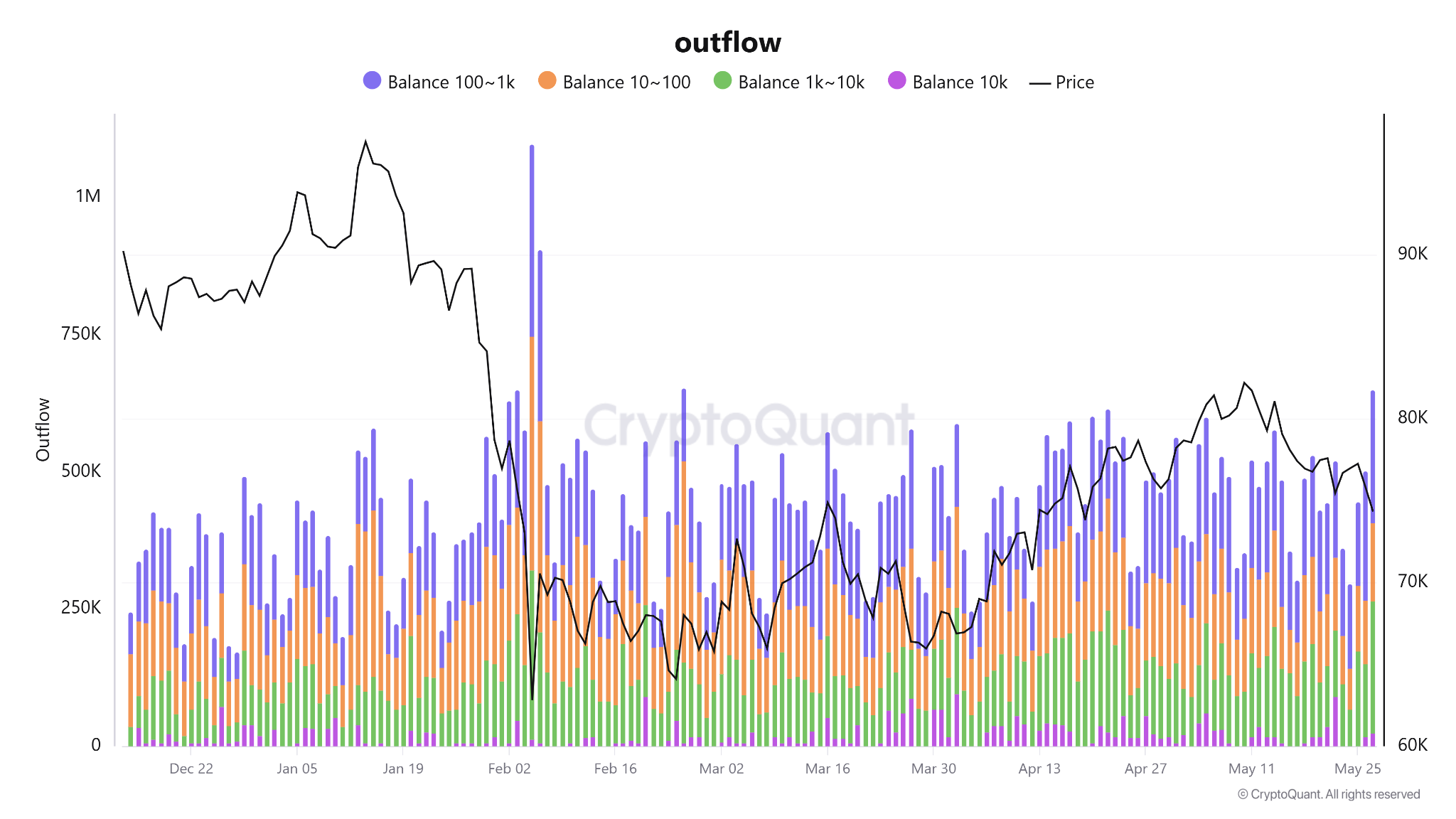
BTC outflows across various balances. Source: CryptoQuant
Related: Crypto liquidations hit $935M as Bitcoin price dips to $72.6K
BTC long-term holders signal conviction
The latest correction differs from the the selloffs in October 2025 and February 2026, when long-term holders actively reduced exposure to price weakness. Older Bitcoin cohorts are not distributing at the same pace during the current pullback, keeping a larger share of supply inactive despite the move below $75,000.
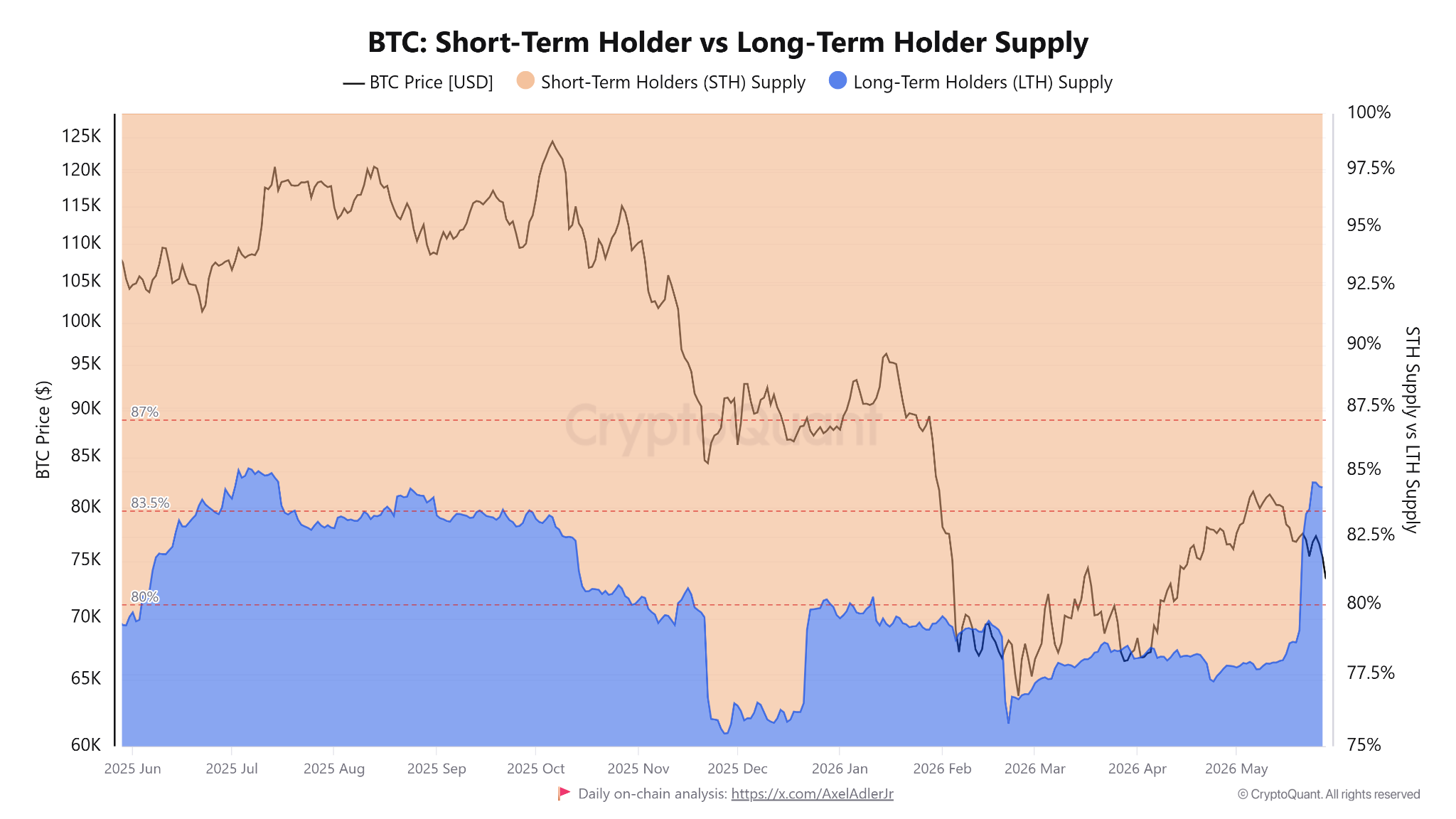
BTC long-term holder supply. Source: CryptoQuant
Long-term holders now control 84.3% of Bitcoin’s circulating supply, matching levels seen when BTC traded between $105,000 and $126,000 in Q3 2025. The lack of aggressive selling from these wallets may slow the pace of the downside breakout below $75,000.
BTC spot trading activity has also cooled sharply. Market analyst Darkfost noted that Binance spot volumes dropped to $36.4 billion from $198.6 billion in October 2025, an 81% decline. Monthly Bitcoin spot volumes stood near $84 billion in February before falling by another $50 billion over the past three months.
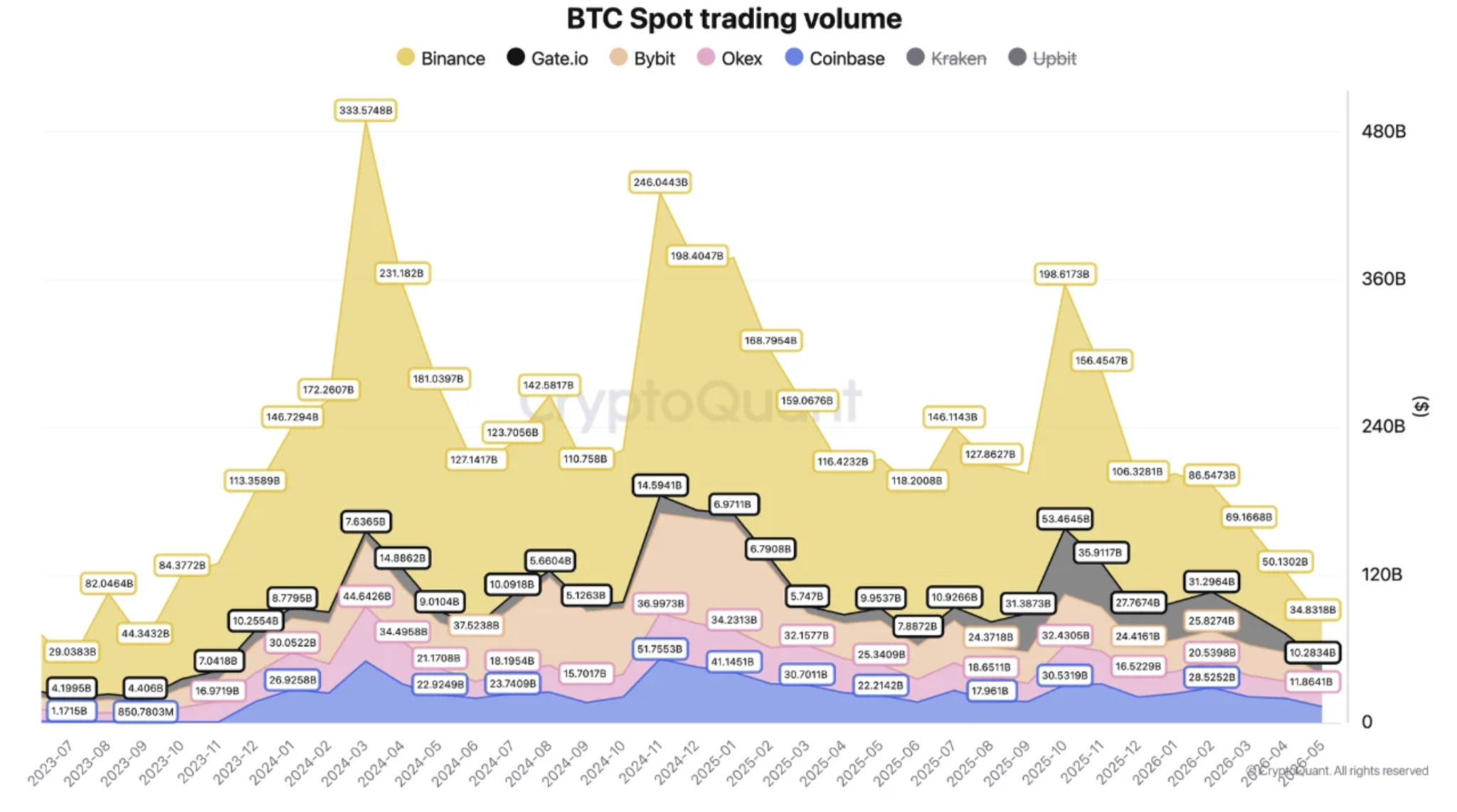
BTC Spot trading volume. Source: CryptoQuant
Lower spot volumes often reduce the amount of immediate sell pressure entering the market, since fewer coins are actively changing hands during periods of weak participation. Similar conditions appeared near the end of the 2023 bear market before volatility and trend strength returned.
BTC realized losses also continued to decline as fewer participants sold Bitcoin at a loss. The 30-day moving average for realized losses dropped to $12.85 million on May 26, from $56 million on Feb. 19, suggesting weaker capitulation activity near the $75,000 level.
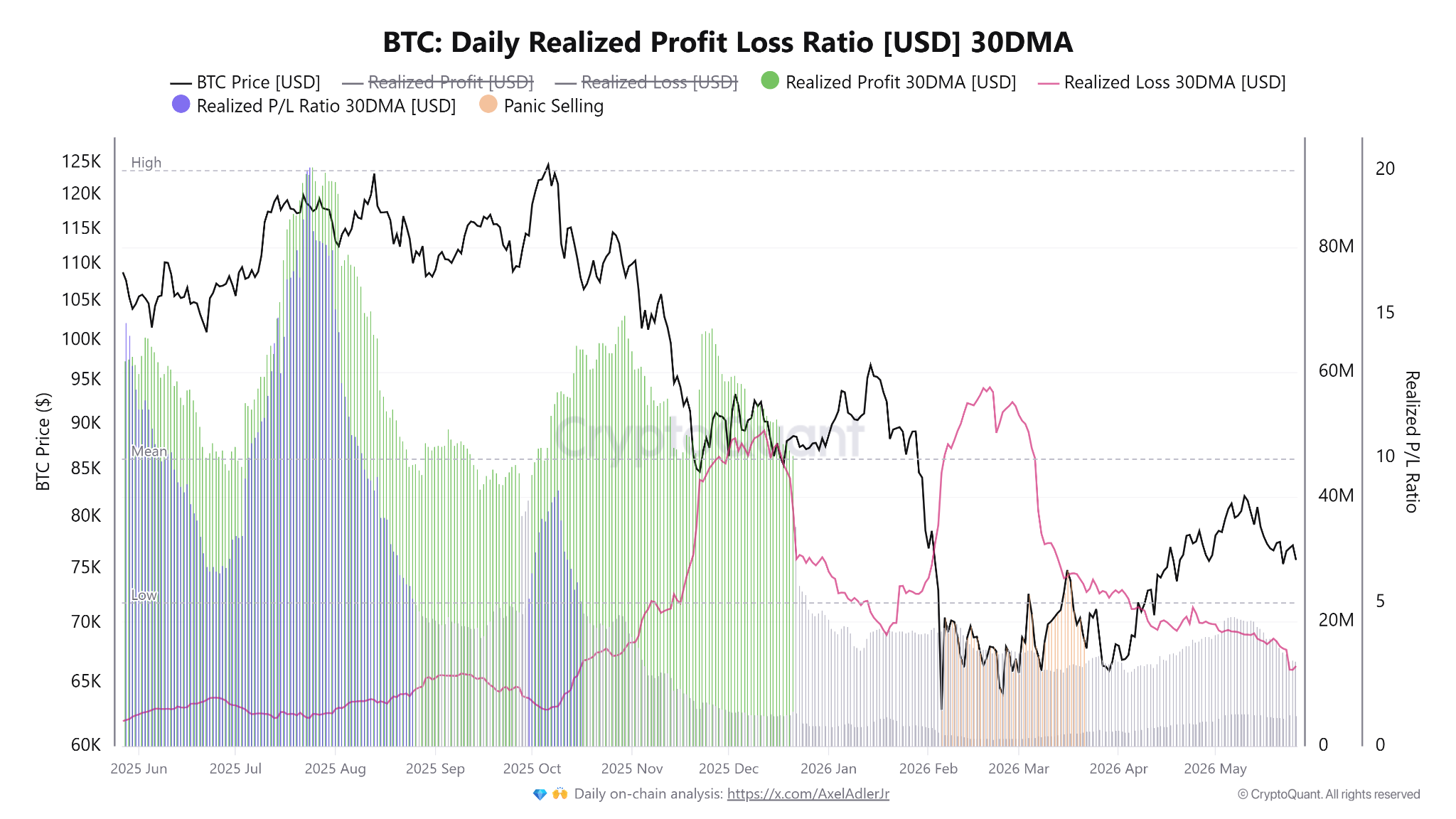
BTC daily realized profit loss ratio 30-day average. Source: CryptoQuant
Related: Bitcoin price falls to six-week lows as US PCE inflation hits highest since 2023
